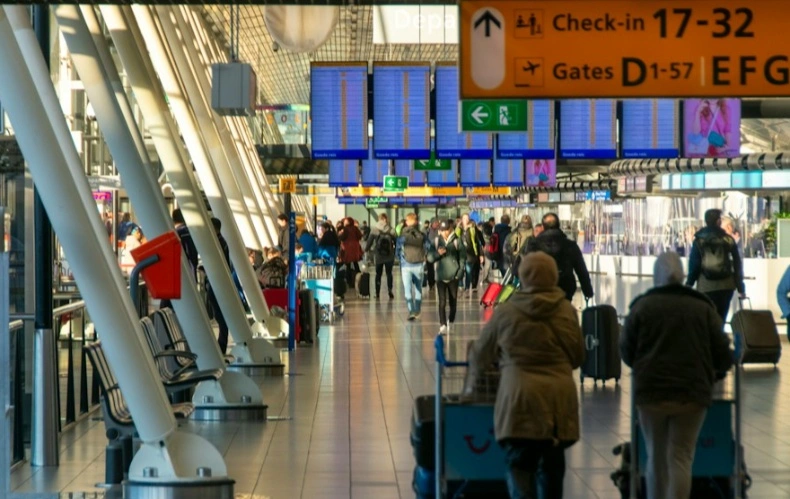
US Nationwide Flight Ground Stop: What Happened, What Officials Said and How Many Flights Were Canceled
Section: News
Bavarian Premier Markus Söder has reiterated his call for a resolution within Germany's ruling coalition on lowering the electricity tax and addressing the issue of bracket creep, a form of hidden taxation due to inflation. Söder's comments came amidst an ongoing dispute within the government ranks about these economic measures, emphasizing the importance of such a decision to maintain governmental credibility. Speaking on the ZDF program "Berlin direkt", Söder stated, "These matters must be resolved" and urged that government leaders come together to find a common solution.
The issue has been a point of contention, predominantly among members of the Christian Democratic Union (CDU), after the standing committee on budgetary matters in the Bundestag failed to reach an agreement on the proposed tax reduction. This decision was in direct contradiction to the expectations set by CDU Chancellor Friedrich Merz and the party leadership, prompting frustrations and calls for action. A crucial meeting is scheduled for Tuesday where leaders from the CDU, Christian Social Union (CSU), and Social Democratic Party (SPD) are expected to seek a breakthrough on both the electricity tax and bracket creep discussions.
Söder expressed confidence in the financial capability to reduce the electricity tax, suggesting potential savings from existing budgetary allocations. He pointed out that significant unused funds from the Climate and Technology Transfer Fund could provide the needed financial support. Furthermore, Söder suggested the introduction of an excess profits tax on oil companies as another viable option, while highlighting his stance against reducing the increased pension for mothers, a measure he firmly opposed.
The debate has also seen input from other prominent state leaders within the CDU and CSU. Hessian Premier Boris Rhein supports the tax reduction and has called for measures to rebuild trust among party members and the public. Similarly, North Rhine-Westphalia's Premier Hendrik Wüst and Rhineland-Palatinate's head Gordon Schnieder reiterated the need for decisive action on the electricity tax issue. Schleswig-Holstein's Premier Daniel Günther voiced confidence in Chancellor Merz's ability to guide the party through these discussions successfully.
The decision's impact on citizens has been a subject of debate, with forecasts suggesting potential household savings of up to 80 euros annually, though these figures remain speculative. The discourse around the electricity tax and bracket creep highlights the broader challenges facing the current coalition government in addressing fiscal policy and economic relief measures amidst political and public scrutiny.
Section: News
Section: News
Section: News
Section: News

Section: Fashion
Section: News
Section: Politics
Section: Business
Section: News
Section: Business
Both private Health Insurance in Germany and public insurance, is often complicated to navigate, not to mention expensive. As an expat, you are required to navigate this landscape within weeks of arriving, so check our FAQ on PKV. For our guide on resources and access to agents who can give you a competitive quote, try our PKV Calculator.
Germany is famous for its medical expertise and extensive number of hospitals and clinics. See this comprehensive directory of hospitals and clinics across the country, complete with links to their websites, addresses, contact info, and specializations/services.
Didn't manage to get a ticket for Linkin Park? Or still not enough after the concert? Join us at CRASH on June 12th for our "IN THE END" Linkin Park Special + CORE NIGHT.All night long, we'll be playing Linkin Park's music, along with Nu Metal, Metalcore, and Alternative Rock from bands such as Limp...

No comments yet. Be the first to comment!