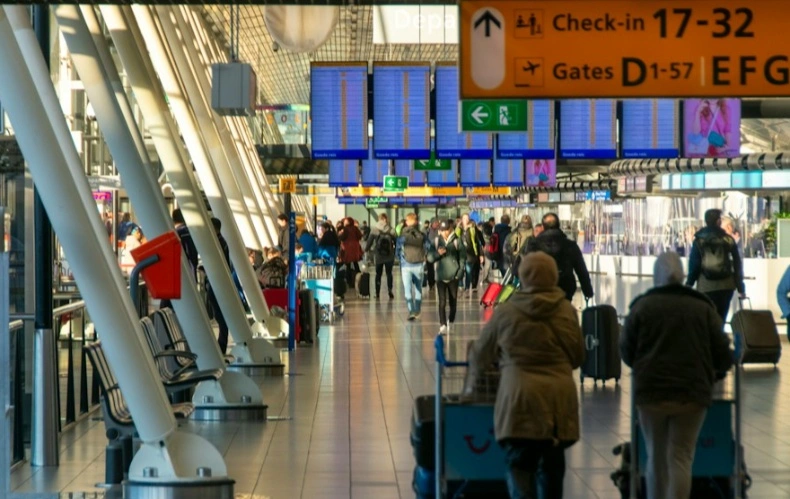
US Nationwide Flight Ground Stop: What Happened, What Officials Said and How Many Flights Were Canceled
Section: News
The French Navy successfully intercepted a semi-submersible vessel transporting 146 kilograms of cocaine in the Caribbean, a significant operation that highlights international efforts to combat drug trafficking. The intervention, which took place in international waters, was revealed by France's Ministry of Defense on Sunday.
Three crew members aboard the drug-carrying vessel reportedly jumped into the sea as the French naval forces approached, according to the ministry’s statement. A fourth crew member remained on board long enough to scuttle the submarine-like craft, causing it to sink within minutes.
The operation marked a notable achievement for the French Navy as it was reportedly the first time they had intercepted such a semi-submersible, which is a vessel partially submerged, making it harder to detect by radar and aerial surveillance.
In their report, French authorities stated that all four individuals involved were apprehended after the vessel was submerged. Bags containing cocaine, weighing a total of 146 kilograms, were recovered from the water. The individuals involved in the operation are expected to face legal proceedings, though no details on charges have been disclosed at this stage.
The success of the operation was credited to cooperation with international forces. French Defense Minister Catherine Vautrin praised the collaboration, highlighting that a U.S. maritime patrol aircraft assisted in detecting the semi-submersible. The operation underscores the effectiveness and necessity of international partnerships in tackling organized crime and drug trafficking across regions.
France has been actively engaged in anti-narcotics operations in the Caribbean, a known route for drug traffic. This latest seizure forms part of broader efforts to curb the flow of illegal substances into Europe and beyond from the Americas.
This development comes against the backdrop of increasing use of semi-submersible vessels by drug traffickers. These vessels have become a preferred method due to their ability to evade traditional methods of detection, traveling with just the engine and exhaust ports visible above water, while large portions remain submerged.
The French Navy’s use of state-of-the-art technology and tactical coordination with allied forces in such operations is seen as critical to disrupting these sophisticated smuggling tactics. Advanced surveillance techniques and naval assets, such as helicopters equipped for maritime patrols, were instrumental in this endeavor.
In recent years, there has been an increase in international collaborative efforts to monitor shipping lanes and intercept illegal transactions in the Caribbean. Such operations often involve cooperation between multiple countries’ naval forces and coast guards, aimed at dismantling networks involved in drug trafficking and other unlawful maritime activities.
Drug smuggling via the Caribbean has been a persistent issue, with routes often starting in South America. Traffickers use a variety of methods to transport illicit goods, exploiting isolated areas and the vast open waters of the Caribbean Sea to evade detection.
In her remarks, Minister Vautrin emphasized the importance of continuing such international partnerships to maintain pressure on drug cartels and disrupt their operations. The French Navy's enforcement efforts reflect a broader strategy to promote security and uphold law and order at sea, particularly in regions prone to illegal trafficking.
The operation also raises awareness about the evolving challenges in combating maritime drug trafficking, driving home the message that persistent vigilance and adaptability are essential in countering these threats. The incident serves as a reminder of the innovative methods traffickers employ and the continuous need for maritime security forces to adapt their strategies and capabilities to stay ahead.
The successful interception of the semi-submersible by the French Navy not only prevented a significant quantity of drugs from reaching its destination, further fueling illegal markets, but also demonstrated the effectiveness of joint international security efforts and intelligence sharing in tackling global drug trade issues.
Section: News
Section: News

Section: News
Section: News

Section: Fashion
Section: News
Section: Politics
Section: Business

Section: News

Section: Business
Both private Health Insurance in Germany and public insurance, is often complicated to navigate, not to mention expensive. As an expat, you are required to navigate this landscape within weeks of arriving, so check our FAQ on PKV. For our guide on resources and access to agents who can give you a competitive quote, try our PKV Calculator.
Germany is famous for its medical expertise and extensive number of hospitals and clinics. See this comprehensive directory of hospitals and clinics across the country, complete with links to their websites, addresses, contact info, and specializations/services.
Didn't manage to get a ticket for Linkin Park? Or still not enough after the concert? Join us at CRASH on June 12th for our "IN THE END" Linkin Park Special + CORE NIGHT.All night long, we'll be playing Linkin Park's music, along with Nu Metal, Metalcore, and Alternative Rock from bands such as Limp...

No comments yet. Be the first to comment!