
Fears over AI market slow impact global tech stocks
Section: Business
The Ukrainian capital, Kyiv, experienced significant disruptions following a series of coordinated drone and missile attacks attributed to Russian forces. The assaults began with multiple waves of drones during the day and escalated into ballistic missile strikes as night fell, resulting in substantial damage to infrastructure and civilian life.
Throughout the early hours, numerous residents sought safety in makeshift shelters such as parking garages repurposed as air raid bunkers. Spaces were crowded, with people attempting to rest in their vehicles or on improvised bedding while intermittent explosions reverberated overhead. The Ukrainian air defense system mounted a robust response, intercepting a considerable number of incoming threats, but some drones and missiles breached defenses, causing destruction to various buildings and leaving significant debris across the city.
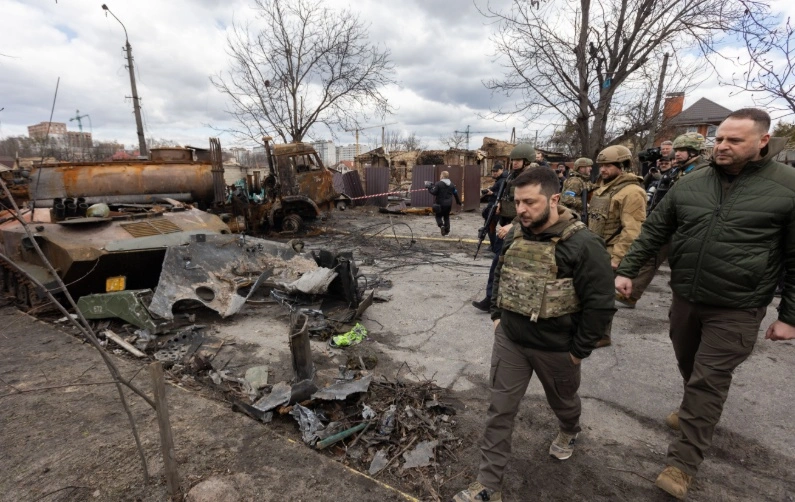
Emergency services responded swiftly to rescue injured individuals from damaged structures. Photographs from the scene revealed the extensive scale of destruction, with entire buildings reduced to rubble and emergency personnel working amid the aftermath. According to official sources, at least six fatalities and numerous injuries were reported as a direct result of the attacks.
The escalation in hostilities followed the conclusion of a temporary three-day ceasefire. Ukrainian authorities had issued earlier warnings about the likelihood of a large-scale aerial offensive, particularly targeting critical infrastructure such as energy facilities, defense industry plants, and government buildings. In a single day, Russia reportedly launched over 750 attack and decoy drones across Ukraine, marking a notable intensification in their operational tactics.
In response to the drone incursions, Ukrainian forces employed electronic warfare techniques, including the disruption of GPS signals in areas north of Kyiv. This measure, intended to hinder the navigation of unmanned aerial vehicles, also led to interruptions in civilian navigation devices. The deployment of these countermeasures underscores the evolving nature of modern conflict and the increasing reliance on technological solutions in active defense scenarios.
Military analysts have observed a shift in Russian strategy, with a combination of daylight drone assaults followed by nighttime missile barrages. This pattern, identified by defense research organizations, is considered a significant operational development, designed to exhaust air defense resources and maximize pressure on urban centers. Mobile air defense units stationed outside Kyiv have reportedly succeeded in intercepting hundreds of drones, utilizing both missile systems and conventional firearms to defend key locations.
Despite these defensive efforts, the scale and frequency of the attacks have placed considerable strain on local infrastructure and emergency services. The repeated bombardments have disrupted daily life for Kyiv's residents, forcing many to remain vigilant and seek shelter at a moment's notice. Authorities continue to urge the public to follow safety protocols as the security situation remains volatile.
The ongoing conflict has drawn international attention, with calls for renewed diplomatic efforts and increased support for Ukraine's defense capabilities. As the situation develops, Ukrainian officials remain focused on bolstering protective measures for civilians and critical infrastructure in anticipation of further attacks.
Section: Business
Section: Politics

Section: Travel

Section: News

Section: Science

Section: Health

Section: Business

Section: Fashion

Section: Science

Section: Business
Both private Health Insurance in Germany and public insurance, is often complicated to navigate, not to mention expensive. As an expat, you are required to navigate this landscape within weeks of arriving, so check our FAQ on PKV. For our guide on resources and access to agents who can give you a competitive quote, try our PKV Calculator.
Germany is famous for its medical expertise and extensive number of hospitals and clinics. See this comprehensive directory of hospitals and clinics across the country, complete with links to their websites, addresses, contact info, and specializations/services.
Didn't manage to get a ticket for Linkin Park? Or still not enough after the concert? Join us at CRASH on June 12th for our "IN THE END" Linkin Park Special + CORE NIGHT.All night long, we'll be playing Linkin Park's music, along with Nu Metal, Metalcore, and Alternative Rock from bands such as Limp...



No comments yet. Be the first to comment!