
Fears over AI market slow impact global tech stocks
Section: Business
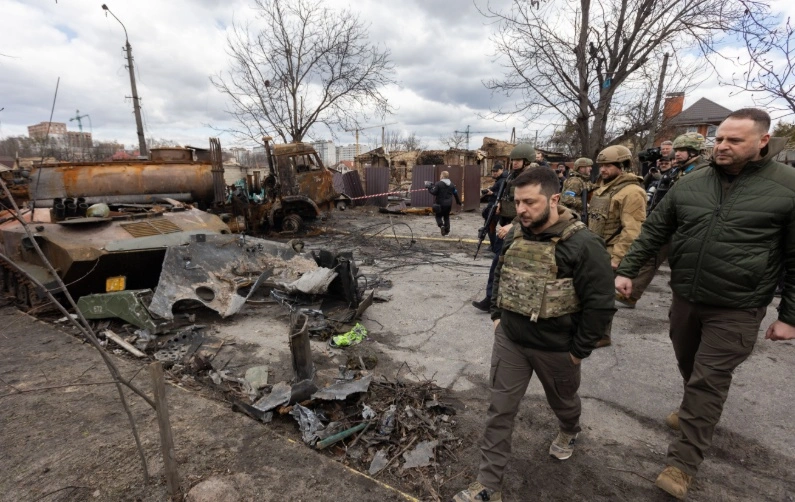
As negotiations continue to seek a resolution to the ongoing conflict between Ukraine and Russia, territorial concessions remain a key point of contention. Russia is seeking full control of the Donbass region, while Ukraine is determined to retain areas still under its administration. The Ukrainian leadership has repeatedly stated that territorial integrity is non-negotiable, with the issue representing the most significant obstacle in peace discussions.
Recent negotiations, including those involving US intermediaries in Moscow, have failed to bridge the gap between Russian demands and Ukrainian positions. While Russia insists on claiming the entire Donbass as part of its territory, Ukraine is unwilling to cede any areas not already occupied by Russian forces. The current situation sees Ukrainian control primarily limited to the Kramatorsk and Sloviansk areas, which have experienced significant population displacement since the conflict began.
The Donbass region has a deep symbolic significance for both sides. For Ukraine, relinquishing territory that has been under its protection for years would not only be a strategic loss but could also be interpreted as encouragement for further Russian advances. Since 2014, Russia has already annexed Crimea and parts of Donbass, and concerns persist that additional concessions could embolden further territorial claims. Ukrainian officials and international observers have issued warnings that such outcomes could have far-reaching implications for the security of the region.
Beyond symbolism, the fate of the local population is a critical factor. Many residents have evacuated, but those remaining face the risk of repression and forced assimilation under Russian control. Reports from international organizations indicate that human rights abuses, including arbitrary detention and suppression of free expression, are widespread in Russian-occupied territories. The process of 'Russification' has reportedly led to the denial of state benefits to those who refuse Russian citizenship.
Economic considerations also play a significant role. The Donbass has historically served as a major industrial center for Ukraine, with industries such as steel production, machinery manufacturing, and coal mining. Although the war has severely disrupted these sectors, the region remains vital for Ukraine's post-war reconstruction due to its rich deposits of resources like iron ore, coal, and lithium. Should Russia secure full control, it would gain access to these assets, potentially strengthening its economic position in an era of shifting global energy markets.
Proposals for peace plans, including drafts attributed to the United States, have at times included recognition of Russian control over Crimea, Luhansk, and Donetsk, as well as a freeze of frontlines in other contested areas. However, following input from European allies, revised drafts now reportedly reject the idea of Ukraine surrendering any areas not already occupied. The Ukrainian constitution presents a further barrier, as any alteration of national borders requires a nationwide referendum--a scenario deemed unfeasible during wartime conditions. Additionally, constitutional amendments would require substantial parliamentary approval and judicial review, making voluntary cession of territory highly improbable.
While the concept of 'de facto' territorial loss has been discussed--referring to areas under effective Russian control without formal legal recognition--Ukraine maintains its stance against legitimizing such outcomes. This approach is informed by the experience of Crimea, where Russian control persists despite international condemnation and ongoing Ukrainian resistance. The issue of territorial integrity remains a central and unresolved element in efforts to end the conflict, with significant political, legal, humanitarian, and economic ramifications for both Ukraine and the broader international community.
Section: Business
Section: Politics

Section: Travel

Section: News

Section: Science

Section: Health

Section: Business

Section: Fashion

Section: Science

Section: Business
Both private Health Insurance in Germany and public insurance, is often complicated to navigate, not to mention expensive. As an expat, you are required to navigate this landscape within weeks of arriving, so check our FAQ on PKV. For our guide on resources and access to agents who can give you a competitive quote, try our PKV Calculator.
Germany is famous for its medical expertise and extensive number of hospitals and clinics. See this comprehensive directory of hospitals and clinics across the country, complete with links to their websites, addresses, contact info, and specializations/services.
Didn't manage to get a ticket for Linkin Park? Or still not enough after the concert? Join us at CRASH on June 12th for our "IN THE END" Linkin Park Special + CORE NIGHT.All night long, we'll be playing Linkin Park's music, along with Nu Metal, Metalcore, and Alternative Rock from bands such as Limp...



No comments yet. Be the first to comment!