
German companies unprepared for AI-based cyber attacks
Section: Science
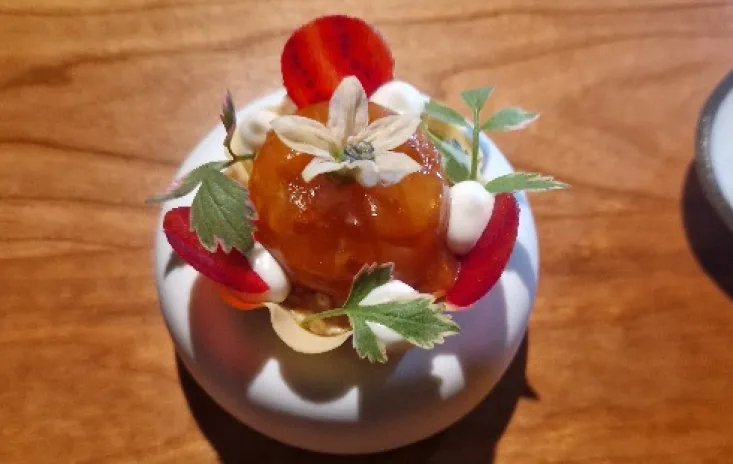 The wooden door to the restaurant looked ornate yet sturdy, while behind it lay a delicately lit staircase that felt both discreet and deliberate. As entrances go, it was understated, almost reserved, a brief prelude to what followed. Perhaps it was the lighting, or the sense of stepping into a concealed space just moments from Marienplatz, that heightened the anticipation. Then again, this was Tohru in der Schreiberei, Munich's three-Michelin-starred restaurant under the direction of Tohru Nakamura, and expectations were inevitably high before I even reached the top of the stairs.
Inside, I was greeted by a member of staff who recognised my name immediately when offered and guided me to a small side room where colleagues were already gathered. Even before taking a seat, there was a clear sense of assurance, not theatrical, not formal, but quietly confident. The welcome was warm without being familiar, polished without stiffness. It set the tone for the evening. The service team projected ease and competence in equal measure, and it was evident early on that they had been assembled with care, valuing emotional intelligence as much as technical skill.
The dining room itself reinforced this impression. The interior carried an earthy calm, with wood, muted tones and gentle lighting combining to create a space that felt intimate rather than grand. While the aesthetic would not be out of place in a refined Tokyo dining establishment, it retained a distinctly European sensibility. A restrained, eclectic soundtrack sat just beneath conversation, shaping the atmosphere without demanding attention, yet pleasantly attainble.
The tasting menu at Tohru is designed as a narrative rather than a sequence of dishes, and here Nakamura's hallmark fusion of Japanese technique with German and wider European influences quickly became evident. Each course arrived with quiet confidence, brought to the table in a choreographed display of elegant teamwork. Elegant being the word, as the service was subtly synchronised in delivery. Flavours were articulate without fanfare and striking without theatrics. Signature elements, from Koshihikari rice with N25 Osciètre caviar, eel, sansho and shio-koji, to sauces built on fermented rice, sake and subtle aromatics, demonstrated a precision of balance that is a defining feature of the kitchen's voice.
Early courses such as the Tarbouriech oyster with wasabi and tofu set the tone: clean, restrained and exact. The tartlette of char with meadowsweet and beetroot showed a deft hand with acidity and texture, while the Breton lobster with green olives, shiso and romesco brought depth without weight. Particularly memorable was the Balfegó tuna paired with Ozaki Wagyu, porcini and crème crue, a dish that could easily tip into excess, but instead remained composed and disciplined.
More traditionally structured plates followed, including turbot with Tropea onion, pil-pil and beurre rouge, and Herrmannsdorf pork chin with XO anchovies, eggplant, niboshi and mikan. These courses revealed Nakamura's ability to move fluidly between cultures without forcing contrast. The cooking never sought to impress through complexity alone; instead, it trusted clarity, restraint and repetition of theme.
The drinks offering mirrored this philosophy. The wine and sake list was confident and international, ranging from Chenin Blanc from Savennières and Palomino from Jerez, through to Vosne-Romanée and Barolo, alongside thoughtful sake selections such as Nanbu Bijin. Indeed their signature drink delivered before the meal was a fusion of Japanese whiskey, and a slight iinclusion of green tea, served over an ice sphere. Pairings were suggested with precision, and explanations were concise and informative, never verbose. Each glass felt purposeful, chosen to support rather than overshadow the plate. The sommelier was on hand to answer questions and help us appreciate the more delicate nuance in the offerings, which was gratefully appreciated and impressed with his knowledge and passion.
Dessert, presented under the heading Okashi, was handled with the same composure as the savoury courses. Madeleine with carrot and Douglas fir leaned into subtle sweetness and aroma rather than sugar. Ice confections featuring maitake and chestnut, baked apple with beech nuts and yuzu, and yatsuhashi with cinnamon and rose hip showed an assured understanding of restraint in pastry. The closing dim sum of plum, Piedmont hazelnut and sobacha brought the meal full circle, echoing earlier notes without repetition. The visual presentation of the dessert was breathtaking and one could not help but feel a pang of regret at the inevitable disassemly of such a work of art, for it could not be described as anything other.
Throughout the evening, service remained precise and intuitive. Timing was unforced, explanations were clear, and the room never felt managed, only guided. The staff, who work as a team with the same members working five evenings a week, really shone throughout. They provided the cushion of warmth, friendliness and total professionalism, upon which the entire evening rested. In a city with a growing number of high-end dining destinations, Tohru in der Schreiberei distinguishes itself not through spectacle, but through consistency, balance, intelligence and intent. This is a restaurant that understands its own voice and speaks it fluently.
Section: Science

Section: Business

Section: Health
Section: Business

Section: Science

Section: News

Section: Politics

Section: News

Section: Fashion
Section: Fashion
Both private Health Insurance in Germany and public insurance, is often complicated to navigate, not to mention expensive. As an expat, you are required to navigate this landscape within weeks of arriving, so check our FAQ on PKV. For our guide on resources and access to agents who can give you a competitive quote, try our PKV Calculator.
Germany is famous for its medical expertise and extensive number of hospitals and clinics. See this comprehensive directory of hospitals and clinics across the country, complete with links to their websites, addresses, contact info, and specializations/services.
Didn't manage to get a ticket for Linkin Park? Or still not enough after the concert? Join us at CRASH on June 12th for our "IN THE END" Linkin Park Special + CORE NIGHT.All night long, we'll be playing Linkin Park's music, along with Nu Metal, Metalcore, and Alternative Rock from bands such as Limp...



No comments yet. Be the first to comment!