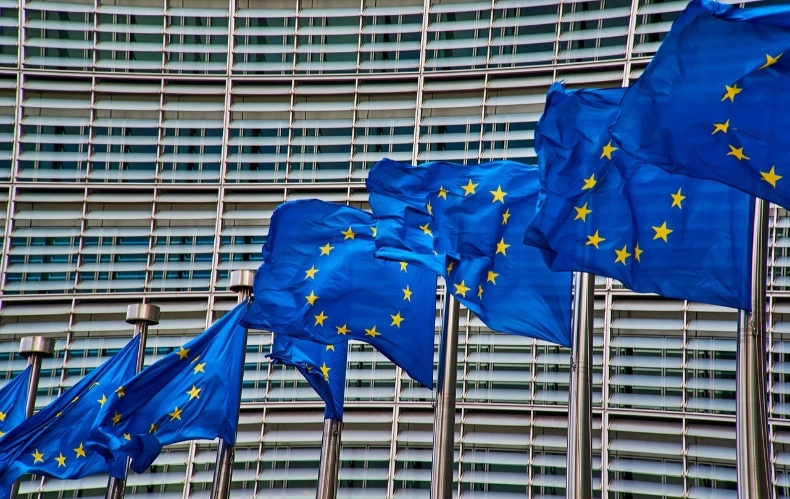
EU Approves €489 Million for Spain, Portugal, Italy and Malta After Early 2026 Storms
Section: Business
Senior leaders of Germany's Christian Democratic Union (CDU) have firmly rejected any possibility of a coalition with the Left Party (Die Linke) at both federal and state levels. This stance follows recent controversial remarks made by Luigi Pantisano, the newly elected leader of the Left Party, who accused the CDU of pursuing 'fascist policies' during a party congress. Although Pantisano later issued a partial apology, CDU officials have expressed concerns over the direction of the Left Party under his leadership and have questioned the sincerity of his retraction.
CDU General Secretary Carsten Linnemann outlined the party's position, insisting that the CDU would not engage in any form of cooperation with Die Linke. He cited increasing radicalization within the Left Party, referencing concerns about antisemitism and the glorification of historical dictators by its youth organization. Linnemann argued that any party challenging Germany's democratic foundations could not be considered a partner for the CDU.
Roman Poseck, Minister of the Interior for the state of Hesse and a member of the CDU, also dismissed the possibility of collaboration with either Die Linke or the far-right Alternative für Deutschland (AfD). Poseck stated that extremist positions on either end of the political spectrum should be avoided and emphasized the importance of maintaining a clear distance from such groups. According to Poseck, recent statements from the Left Party leadership have crossed acceptable boundaries in democratic discourse, reinforcing the CDU's commitment to its previously established 'firewall' against both the AfD and Die Linke.
Wolfram Weimer, Minister of State for Culture in the Federal Chancellery and a close ally of CDU leader Friedrich Merz, criticized the Left Party's approach to Germany's political center. He highlighted concerns regarding the party's self-identification as the successor to the Socialist Unity Party (SED) of former East Germany and alleged that the party was increasingly isolating itself within the political spectrum due to its rhetoric and actions.
Stephan Mayer, an expert on internal affairs from the Christian Social Union (CSU), which is aligned with the CDU, echoed these concerns. Mayer argued that Die Linke is not a suitable cooperation partner for the CDU/CSU bloc and suggested that the party's activities warrant increased scrutiny from Germany's domestic intelligence agency, the Federal Office for the Protection of the Constitution.
Within the CDU, there are some divergent perspectives regarding cooperation at the regional level. Sven Eppinger, a CDU parliamentarian from Saxony and head of the conservative Heimatunion, differentiated between the Left Party's national and regional representatives. Eppinger expressed openness to working with individual Left Party and AfD members he considered pragmatic, provided their actions align with the interests of Saxony's citizens. However, this view remains a minority within the broader CDU leadership, which continues to uphold formal resolutions prohibiting coalitions with both the Left Party and the AfD.
Recent political developments in eastern federal states such as Saxony-Anhalt and Thuringia have intensified debates within the CDU regarding potential strategies in multi-party landscapes. In Thuringia, the state government led by CDU Minister-President Mario Voigt currently receives tolerance from Left Party representatives, a situation that some CDU officials view as undesirable but necessary given the parliamentary composition. However, multiple CDU leaders have emphasized the need to prevent similar arrangements from becoming precedents in other states or at the federal level.
This internal debate takes place against the backdrop of a polarized political environment, with rising support for both far-left and far-right parties in some regions. The CDU leadership remains adamant that any form of cooperation with parties deemed extremist would undermine its commitment to the democratic order and the stability of Germany's political system.
Section: Business
Section: Business
Section: News

Section: Science
Section: Business
Section: Arts
Section: Health
Section: Politics
Section: Politics
Section: Business
Both private Health Insurance in Germany and public insurance, is often complicated to navigate, not to mention expensive. As an expat, you are required to navigate this landscape within weeks of arriving, so check our FAQ on PKV. For our guide on resources and access to agents who can give you a competitive quote, try our PKV Calculator.
Germany is famous for its medical expertise and extensive number of hospitals and clinics. See this comprehensive directory of hospitals and clinics across the country, complete with links to their websites, addresses, contact info, and specializations/services.
Didn't manage to get a ticket for Linkin Park? Or still not enough after the concert? Join us at CRASH on June 12th for our "IN THE END" Linkin Park Special + CORE NIGHT.All night long, we'll be playing Linkin Park's music, along with Nu Metal, Metalcore, and Alternative Rock from bands such as Limp...



No comments yet. Be the first to comment!