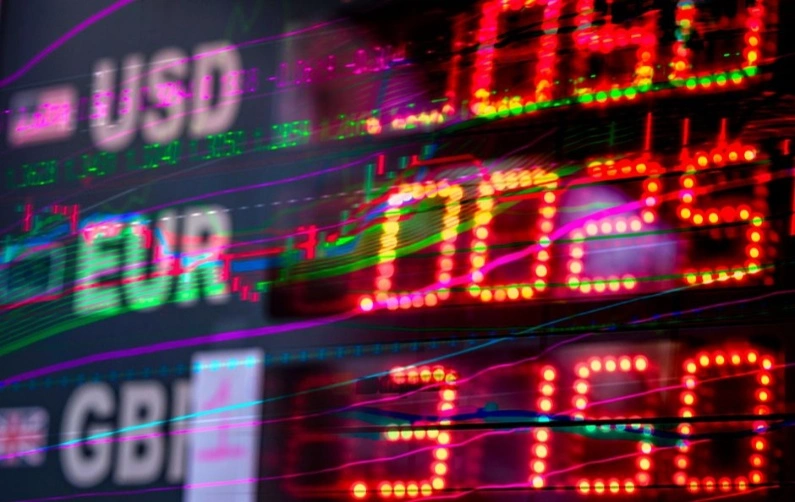
Fears over AI market slow impact global tech stocks
Section: Business
The latest INSA poll has revealed a significant shift in the German political landscape, with the Alternative for Germany (AfD) reaching an unprecedented level of support. The survey indicates that the AfD has achieved its highest rating since its founding, marking a notable increase in its popularity among voters. In contrast, the centre-right alliance of the Christian Democratic Union and Christian Social Union (CDU/CSU) has registered its lowest standing in years, reflecting a substantial decline in their voter base.
The poll also highlights a continuing trend of diminishing support for the two major traditional parties, the Social Democratic Party (SPD) and the CDU/CSU. Together, these parties now account for just over one-third of the projected vote share, suggesting that nearly a quarter of their previous supporters have shifted their allegiance to other parties or have become undecided.
Meanwhile, the Green Party has recorded its strongest result in more than two years, indicating a modest resurgence in its appeal to the electorate. This upward movement is attributed to growing public concern over environmental issues and climate policy, areas where the Greens have maintained a clear and consistent stance.
Conversely, the Free Democratic Party (FDP) and the recently established Bündnis Sahra Wagenknecht (BSW) face the risk of failing to surpass the electoral threshold required for representation in parliament. Both parties have experienced declining support in recent months, raising questions about their prospects in upcoming elections.
Commenting on these developments, political analysts have observed that the German party system is undergoing a period of significant realignment. The ongoing loss of voter confidence in established parties is contributing to a redistribution of votes across the political spectrum. This trend is considered by experts to carry potential implications for future coalition formations and government stability.
The INSA poll results underscore a broader shift in voter sentiment, with increasing fragmentation and polarization among the electorate. The rise of the AfD, combined with the declining fortunes of the CDU/CSU and SPD, signals a changing political environment in Germany. As parties adjust their strategies in response to evolving voter preferences, the coming months are expected to bring further developments in the national political scene.
The data from the poll suggest that Germany's traditional political alliances may face more challenges in forming stable governments, as voter support becomes increasingly dispersed among a wider range of parties. Observers will be closely monitoring whether these trends continue, and how they might influence both policy direction and party dynamics in the run-up to future elections.
Section: Business

Section: Politics

Section: Travel
Section: News

Section: Science

Section: Health
Section: Business
Section: Fashion

Section: Science

Section: Business
Both private Health Insurance in Germany and public insurance, is often complicated to navigate, not to mention expensive. As an expat, you are required to navigate this landscape within weeks of arriving, so check our FAQ on PKV. For our guide on resources and access to agents who can give you a competitive quote, try our PKV Calculator.
Germany is famous for its medical expertise and extensive number of hospitals and clinics. See this comprehensive directory of hospitals and clinics across the country, complete with links to their websites, addresses, contact info, and specializations/services.
Didn't manage to get a ticket for Linkin Park? Or still not enough after the concert? Join us at CRASH on June 12th for our "IN THE END" Linkin Park Special + CORE NIGHT.All night long, we'll be playing Linkin Park's music, along with Nu Metal, Metalcore, and Alternative Rock from bands such as Limp...



No comments yet. Be the first to comment!