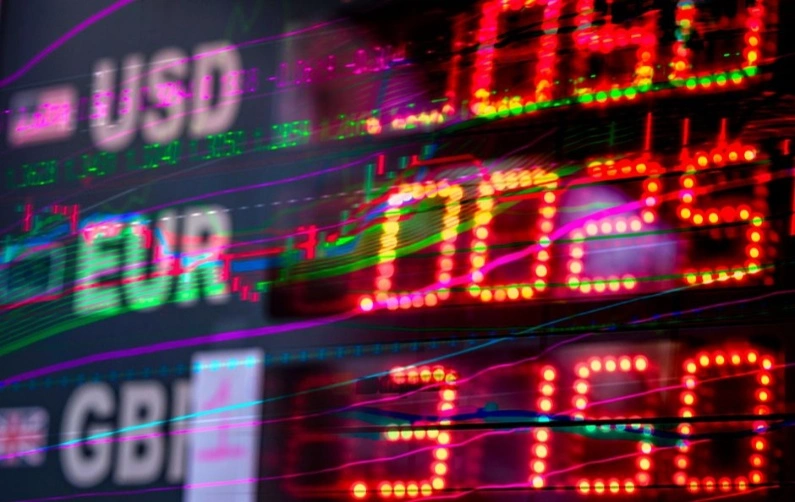
Fears over AI market slow impact global tech stocks
Section: Business
United States President Donald Trump has reiterated the country's ongoing support for the North Atlantic Treaty Organization (NATO), despite expressing skepticism regarding the alliance's reciprocal commitment to Washington. In a recent statement on his social media platform, Trump emphasized that the United States would continue to stand by NATO, asserting that the strength of the alliance is largely dependent on American involvement. He also noted that adversaries such as Russia and China only perceive NATO as a significant force as long as the United States remains an active member.
Trump raised concerns about whether NATO member states would provide adequate assistance to the United States should the need arise. These remarks arrive at a time when questions have been mounting over the extent of US allegiance to the alliance, particularly in light of recent developments involving Greenland, an autonomous territory within the Kingdom of Denmark and part of the NATO alliance.
Controversy intensified after members of the Trump administration issued warnings about the possible annexation of Greenland. This prospect has led to heightened diplomatic friction between the United States and several European partners. The Danish government, led by Prime Minister Mette Frederiksen, strongly cautioned that any attempt by Washington to annex Greenland could jeopardize the future of NATO. Frederiksen remarked that an attack by the United States on another NATO country would fundamentally undermine the foundation of the alliance.
Germany responded in a more restrained manner, with government spokesperson Stefan Kornelius advising against escalating rhetoric and urging all parties to refrain from discussing extreme scenarios. Nonetheless, the situation has prompted serious concerns among European governments, who view the stability and unity of NATO as essential to regional and global security.
President Trump has previously contended that both China and Russia have shown increased interest in Greenland, suggesting that US security interests necessitate American control over the territory. This assertion has been met with strong opposition from European nations. On Tuesday, six key European countries--Denmark, Germany, France, Italy, Poland, and Spain--issued a joint statement emphasizing that decisions regarding Greenland's future rest solely with the people of Greenland and the Danish government. The declaration reinforced the principle of self-determination and rejected any external interference in Greenland's affairs.
NATO, currently comprising 32 member states including the United States, Denmark, Germany, Canada, and the United Kingdom, was established in the aftermath of the Second World War with the aim of ensuring collective defense. Article 5 of the NATO treaty stipulates that an armed attack against one member is considered an attack against all, obligating allies to provide mutual support.
The recent diplomatic tensions have placed renewed focus on the alliance's cohesion and the steadfastness of its commitments. While the United States has publicly affirmed its dedication to NATO, the rhetoric surrounding Greenland and the perceived conditionality of American support have raised questions among member states about the future trajectory of the transatlantic partnership. European leaders continue to advocate for dialogue and adherence to established international agreements, emphasizing the importance of unity in the face of evolving security challenges.
Section: Business
Section: Politics

Section: Travel

Section: News
Section: Science

Section: Health

Section: Business

Section: Fashion

Section: Science

Section: Business
Both private Health Insurance in Germany and public insurance, is often complicated to navigate, not to mention expensive. As an expat, you are required to navigate this landscape within weeks of arriving, so check our FAQ on PKV. For our guide on resources and access to agents who can give you a competitive quote, try our PKV Calculator.
Germany is famous for its medical expertise and extensive number of hospitals and clinics. See this comprehensive directory of hospitals and clinics across the country, complete with links to their websites, addresses, contact info, and specializations/services.
Didn't manage to get a ticket for Linkin Park? Or still not enough after the concert? Join us at CRASH on June 12th for our "IN THE END" Linkin Park Special + CORE NIGHT.All night long, we'll be playing Linkin Park's music, along with Nu Metal, Metalcore, and Alternative Rock from bands such as Limp...



No comments yet. Be the first to comment!