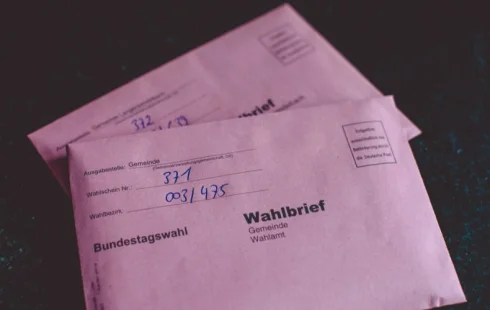

Protests erupt across Europe amid various grievances
Section: News
As Saxony-Anhalt heads toward its next state election, attention is increasingly focused on a handful of smaller parties hovering close to the five-percent threshold required to enter the state parliament, the Landtag., the Greens and the Sahra Wagenknecht Alliance (BSW) are both polling right around that critical mark, while the Free Democrats (FDP) also face a difficult path to clearing it.
Germany's electoral system requires parties to win at least five percent of the vote to gain seats in a state legislature, unless they secure a certain number of direct constituency mandates instead. The rule is designed to prevent excessive fragmentation of parliament, but it also means that votes cast for parties which fall short are effectively redistributed among those that clear the bar.
In a closely contested election, even a fraction of a percentage point can determine whether a party is represented at all, and can significantly shift the overall balance of power among the parties that do make it in.
Both the Greens and the newer BSW are shown by current assessments to be sitting close to the five-percent line in Saxony-Anhalt, according to the report. Their fate is seen as pivotal: should either or both fail to cross the threshold, the votes they received would not translate into seats, effectively boosting the relative share of seats won by parties that do qualify.
The FDP, traditionally a smaller player in eastern German states, is described as facing similarly difficult prospects of reaching the required support level.
Should multiple smaller parties fail to meet the five-percent requirement, the practical effect would be a redistribution of parliamentary seats among the remaining, larger parties. Per the tagesschau.de report, this dynamic could disproportionately benefit the Alternative for Germany (AfD), which would gain a larger relative share of seats even without an increase in its own vote total, simply because rival parties' votes would not count toward seat allocation.
The outcome for the Greens, BSW and FDP will not only determine their own parliamentary representation but could also reshape the broader composition of the Landtag and the arithmetic available for forming a governing coalition. Observers say the final results for these smaller parties will be watched closely as a key factor influencing the overall shape of Saxony-Anhalt's next state government.
Source: tagesschau.de
Section: News
Section: Business
Section: Politics
Section: Travel
Section: News

Section: Science
Section: Health
Section: Business
Section: Fashion
Section: Business
Both private Health Insurance in Germany and public insurance, is often complicated to navigate, not to mention expensive. As an expat, you are required to navigate this landscape within weeks of arriving, so check our FAQ on PKV. For our guide on resources and access to agents who can give you a competitive quote, try our PKV Calculator.
Germany is famous for its medical expertise and extensive number of hospitals and clinics. See this comprehensive directory of hospitals and clinics across the country, complete with links to their websites, addresses, contact info, and specializations/services.
Didn't manage to get a ticket for Linkin Park? Or still not enough after the concert? Join us at CRASH on June 12th for our "IN THE END" Linkin Park Special + CORE NIGHT.All night long, we'll be playing Linkin Park's music, along with Nu Metal, Metalcore, and Alternative Rock from bands such as Limp...



No comments yet. Be the first to comment!