
Carlos Alcaraz Wins the Rolex Paris Masters for the First Time, Beating Ben Shelton
Section: News
A nationwide general strike in Spain on Wednesday has brought significant disruptions to the country's ports and automotive factories. The industrial action, the first of its kind in 14 years, comes just weeks before a snap general election and has seen workers respond en masse to calls from Spain's largest unions, the UGT and CCOO, in protest against the ongoing housing crisis.
Workers established picket lines early in the day, despite adverse weather conditions. These collective actions are a response to mounting frustrations over escalating rents and what many see as a deteriorating housing market. Alicia del Rio, spokesperson for the Madrid Tenants' Union, stated at the start of the strike that their aim is to reform the housing sector so that homes provide accommodation rather than serve the interests of landlord minorities.
The strike affected major sectors heavily, with reported participation reaching around 90 percent in the ports and automobile industries. Among the impacted facilities are Volkswagen's factory in Navarra and Seat's plant in Barcelona. The meat industry and waste management sectors also saw high participation, with 85 percent and 82 percent respectively. However, the strike had a lower impact in the healthcare, social service, and postal sectors, where participation was recorded at 38 percent and 35 percent, respectively.
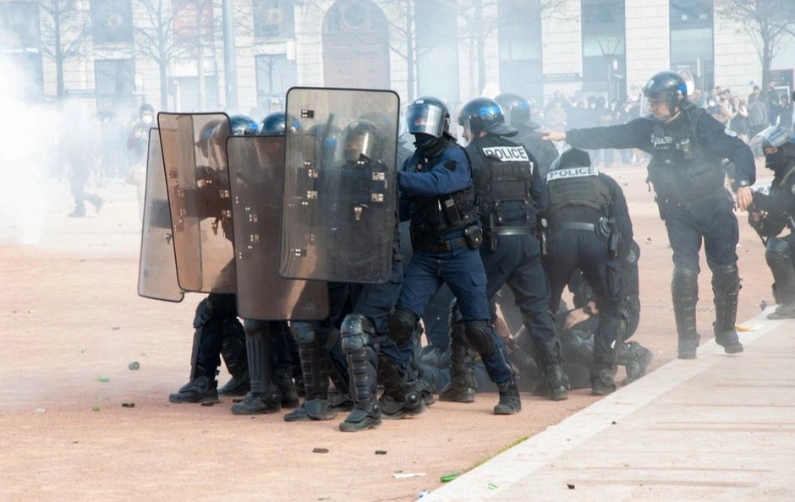
The Met Office issued warnings for 14 regions predicting strong winds, heavy rainfall, and stormy seas, adding challenges to the planned large-scale protest marches scheduled for the afternoon. In Madrid, tensions flared at the Mercamadrid wholesale market, where approximately 1,000 demonstrators gathered. The police reportedly used pepper spray to disperse a picket, resulting in the arrest of one individual and 13 others requiring medical attention. The police confirmed the arrest but not the use of pepper spray at the market, although they acknowledged using the irritant in a separate incident in the suburb of Carabanchel.
Spain's housing deficit is a key issue, with the Central Bank estimating the need for 750,000 more homes, a number projected to exceed one million by 2028. Rising property costs have exacerbated pressures on the rental market, limiting homeownership opportunities and escalating rents. A recent analysis from the Spanish Youth Council highlights that average rents, which hover around €1176, consume nearly 99 percent of young people's average monthly income.
The recent general strike follows weeks of demonstrations and protest camps sparked by the eviction of an 87-year-old woman from her Madrid apartment. These ongoing protests, coupled with Parliament's rejection of government measures against evictions and rent hikes, prompted Prime Minister Pedro Sánchez to call for elections on November 29. Sánchez, whose Social Democratic Party trails in polls, has aimed to shift the political discourse from internal party scandals and a recent train disaster, and instead highlight the housing crisis as a key campaign issue.
While Sánchez's government attributes the housing shortage and rising rents to opposition-controlled regional administrations, the political ramifications of this strike and the ongoing housing difficulties continue to unfold, casting a long shadow over the upcoming elections.
Source: spiegel.de
Section: News
Section: News

Section: Fashion

Section: News

Section: Politics

Section: Business

Section: News

Section: Business
Section: Health

Section: News
Both private Health Insurance in Germany and public insurance, is often complicated to navigate, not to mention expensive. As an expat, you are required to navigate this landscape within weeks of arriving, so check our FAQ on PKV. For our guide on resources and access to agents who can give you a competitive quote, try our PKV Calculator.
Germany is famous for its medical expertise and extensive number of hospitals and clinics. See this comprehensive directory of hospitals and clinics across the country, complete with links to their websites, addresses, contact info, and specializations/services.
Didn't manage to get a ticket for Linkin Park? Or still not enough after the concert? Join us at CRASH on June 12th for our "IN THE END" Linkin Park Special + CORE NIGHT.All night long, we'll be playing Linkin Park's music, along with Nu Metal, Metalcore, and Alternative Rock from bands such as Limp...


No comments yet. Be the first to comment!