Trump Presses NATO Allies in Turkey to Meet Boosted Defense Spending Commitments
President Donald Trump is set to attend a NATO summit in Ankara, Turkey, focusing on ensuring that alliance members fulfill their recent commitments to significantly increase defense spending. At the previous year's summit, NATO countries agreed to elevate their defense budgets, aiming for 5% of their annual gross domestic product over the next decade. The unusually swift response by many states to this target highlights the influence the United States continues to exert within the alliance, even amid ongoing disagreements regarding policy toward Iran, security in the Arctic, and regional diplomatic tensions.
Prior to his departure for Turkey, Trump has expressed ongoing concerns regarding the disproportionate share of defense costs borne by the United States compared to other member states. Efforts by NATO leadership to demonstrate the alliance's growing financial commitments have included high-profile presentations to the U.S. administration, detailing substantial increases in allied defense budgets since 2017. However, the U.S. president has continued to emphasize the urgency of meeting the new spending benchmarks and is expected to reiterate this demand during the summit.
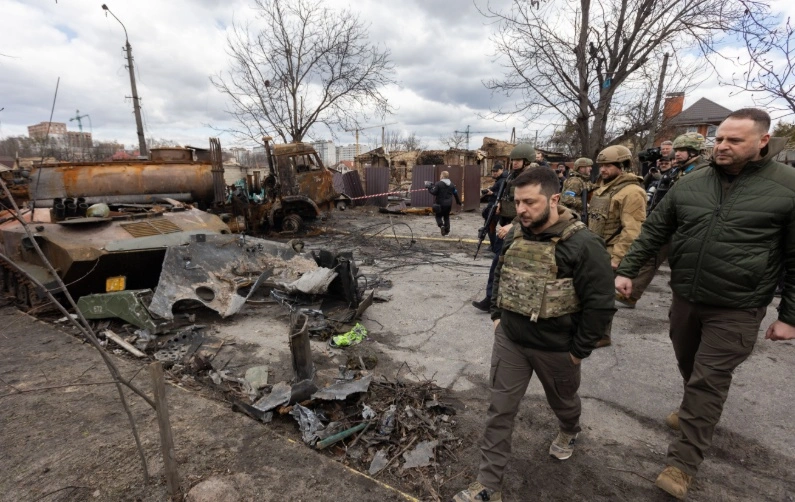
Observers have described the Ankara meeting as a key milestone for measuring NATO's progress on agreed targets. Analysts note that the summit provides an opportunity for leaders to showcase concrete plans toward the 5% goal, reinforcing both the alliance's military readiness and the United States' leadership role. The gathering is also set to address the ongoing war in Ukraine, now in its fifth year, with Trump scheduled to meet with Ukrainian President Volodymyr Zelenskyy. The conflict between Ukraine and Russia remains a focal point for NATO's security agenda, and the summit will likely feature discussions on continued military and economic support for Ukraine.
On the sidelines of the summit, Trump is also expected to hold talks with Turkish President Recep Tayyip Erdogan, underscoring the strategic partnership between the two countries. Further meetings are scheduled with Syrian President Ahmad al-Sharaa, whose government has played a significant role in the region since the ouster of Bashar Assad. The U.S. administration has indicated interest in encouraging Syria to take a greater role in countering Hezbollah activity in Lebanon, although Syrian authorities have publicly declined involvement in such operations.
Despite recent displays of unity at the G7 summit, diplomatic friction among NATO members persists. Trump has reignited disputes with leaders including British Prime Minister Keir Starmer and Italian Prime Minister Giorgia Meloni, while relations with other key figures such as Canadian Prime Minister Mark Carney and French President Emmanuel Macron remain strained. These interpersonal dynamics have prompted a bipartisan delegation of U.S. senators to attend the Ankara summit, aiming to demonstrate ongoing Congressional support for NATO irrespective of the administration's tone.
The summit also comes as the U.S. administration advances its vision for a new phase of the alliance, often referred to as "NATO 3.0." This strategy calls for European countries to assume greater responsibility for their own defense, potentially enabling the U.S. to reallocate military resources to other regions. This approach has been articulated in high-level briefings and speeches by U.S. defense officials, including a recently announced review of American military deployments in Europe. Some European leaders, however, have voiced concerns that reducing U.S. presence could leave the continent more vulnerable to external threats, particularly from Russia.
While many NATO countries have increased defense spending, analysts note that most still rely heavily on U.S. military capabilities for collective security. The principle that an attack against one member constitutes an attack against all remains central to the alliance's deterrence posture. Despite progress toward higher spending, experts underscore that European defense infrastructure remains insufficient for independent action in the event of a major conflict.
In addition to financial contributions, NATO has undertaken new initiatives to address emerging security challenges. One example is the launch of "Arctic Sentry," a military exercise designed to counter Russian and Chinese activities in the Arctic, as well as address U.S. strategic interests in the region. The exercise reflects ongoing debates about the role of territories such as Greenland, which the U.S. has repeatedly cited as vital for transatlantic security.
The Ankara summit is expected to serve as a critical test of alliance cohesion, both in terms of military commitments and in navigating complex regional and interpersonal dynamics among NATO leaders.











No comments yet. Be the first to comment!