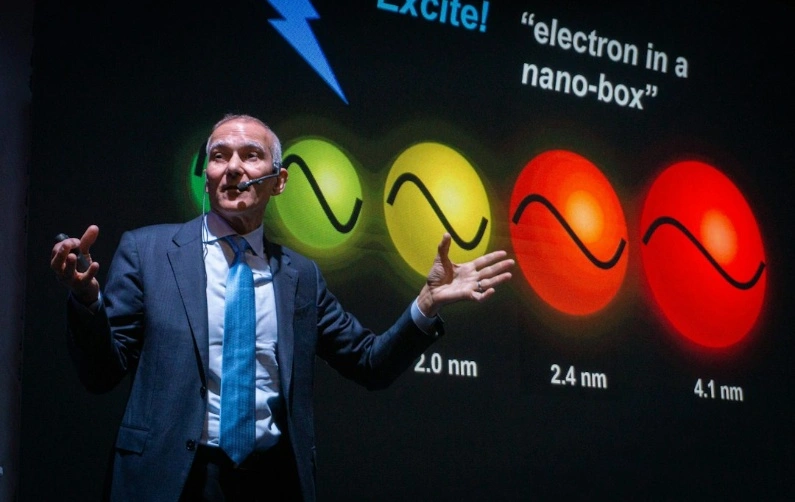
Francis Halzen awarded Nobel Prize for groundbreaking neutrino discovery
Section: Science
Student protests in France have intensified, with blockades at numerous high schools and universities across the country. Demonstrations were held in Paris and other major cities, where young people were joined by union members, teachers, and parents advocating for improved learning conditions. The protests, ongoing for over a week, have spurred a significant police response.
Blocked entrances and disruption of classes have been reported, with the USL high school union stating that over 1,800 institutions have been affected. The French Ministry of Education confirmed that classes were entirely or partially disrupted at 891 high schools. In addition, about 90% of colleges have faced blockades, according to union reports. Nationwide, authorities anticipated between 150,000 to 200,000 demonstrators participating, as reported by BFMTV citing the Interior Ministry.
In Paris alone, a protest march began in the early afternoon and was expected to draw between 20,000 and 40,000 participants. Other cities such as Lyon, Lille, Marseille, Toulouse, Bordeaux, Rennes, and Strasbourg also witnessed gatherings, some of which turned tense with clashes between protesters and law enforcement.
Police were seen in heavy riot gear in several cities, responding to thrown objects and fireworks with water cannons and tear gas. Accusations of police violence have been made by protesters, who displayed placards denouncing the use of tear gas against minors. In Marseille, one sign read, "Use tear gas against rapists, not minors." The police's internal affairs are investigating instances where protesters were reportedly injured during confrontations.
Interior Minister Laurent Nuñez defended the police's tactics in an interview with France Inter, saying the deployment of grenades and rubber bullets was "proportionate" in response to any disturbances. He insisted that it would be inaccurate to describe the situation as police repression.
The student-led demonstrations initially emerged from concerns about poor educational conditions, with hallway conversations highlighting issues such as frequent class cancellations, inadequate substitute teachers, and deteriorating school infrastructure. Young people, particularly in less advantaged areas, have voiced that they feel marginalized and frustrated by a perceived lack of governmental attention to their educational needs.
The demonstrations reflect broader social discontent, as students and educational advocates call for systemic reforms. Parents and teachers have shown their support, often physically placing themselves between students and police forces during protests. Political figures have also expressed disapproval of how the authorities have handled the youth-led movement.
The protests underscore the ongoing tensions within France over educational inequities and the state's handling of civil unrest. With participation from unions, the demonstrations have gained further momentum, emphasizing a collective demand for change in the country's educational policies.
Source: tagesschau.de
Section: Science
Section: News
Section: Politics
Section: News

Section: Fashion
Section: Fashion
Section: Arts
Section: Business

Section: Business

Section: News
Both private Health Insurance in Germany and public insurance, is often complicated to navigate, not to mention expensive. As an expat, you are required to navigate this landscape within weeks of arriving, so check our FAQ on PKV. For our guide on resources and access to agents who can give you a competitive quote, try our PKV Calculator.
Germany is famous for its medical expertise and extensive number of hospitals and clinics. See this comprehensive directory of hospitals and clinics across the country, complete with links to their websites, addresses, contact info, and specializations/services.
Didn't manage to get a ticket for Linkin Park? Or still not enough after the concert? Join us at CRASH on June 12th for our "IN THE END" Linkin Park Special + CORE NIGHT.All night long, we'll be playing Linkin Park's music, along with Nu Metal, Metalcore, and Alternative Rock from bands such as Limp...

No comments yet. Be the first to comment!