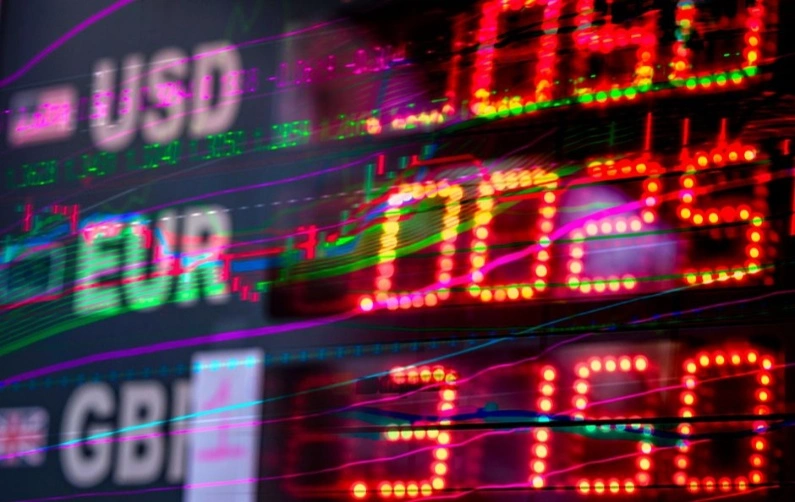
Fears over AI market slow impact global tech stocks
Section: Business
The price of gold has experienced an unprecedented surge since the beginning of the year, increasing by over 70 percent--marking the most significant annual rise since 1979. Silver has also witnessed a string of record highs, reflecting heightened activity in the precious metals market.
Traditionally, investors looking to acquire gold would do so through physical purchases from precious metal dealers. However, modern investment avenues have expanded, allowing individuals to invest in gold without taking physical possession. These options include trading on futures exchanges, where contracts are settled at predetermined prices on specific future dates, and investing in exchange-traded products or funds (ETFs) backed by physical gold. Such financial instruments enable investors to participate in gold price movements with greater flexibility and ease.
According to data from the World Gold Council, investments in physically-backed, exchange-traded gold funds reached $64 billion by October, with a record monthly inflow of $17.3 billion in September alone. This trend illustrates the growing appetite for gold as both an investment vehicle and a perceived safe haven amid global economic uncertainty.
Several factors are driving this surge in demand. The weakening of the US dollar, partially attributed to the aggressive trade policies of the US administration, has made gold more attractive to investors seeking assets less influenced by currency fluctuations. Additionally, some nations, including China, have diversified their reserves by reducing their holdings of US Treasury bonds in favor of gold and other assets.
Analysts note that the primary risk to continued gold price growth would be a slowdown in purchases, particularly from central banks in developing economies. Until such a trend emerges, investor positioning suggests that the upward momentum in gold prices is likely to persist.
Market participants are also anticipating further interest rate cuts by the US Federal Reserve, following three consecutive reductions. Lower interest rates generally benefit non-yielding assets like gold, as they reduce the opportunity cost of holding precious metals. Geopolitical tensions and heightened global uncertainties have further reinforced gold's reputation as a store of value during turbulent times.
Despite these gains, financial experts caution that gold is inherently volatile and should not be viewed as a guaranteed defense against inflation over the short or medium term. They advise that investors maintain diversified portfolios rather than concentrating solely on gold or other commodities. The recent influx of individual investors into the gold market has raised concerns about the potential formation of a speculative bubble. The Bank for International Settlements (BIS), an international financial institution, recently warned that retail investors might be lured into riskier positions by media attention and rapidly rising prices. Historical precedents demonstrate that periods of rapid price escalation in gold have often been followed by substantial corrections, as seen after the 1980 peak, which led to a prolonged phase of subdued prices.
One notable difference from previous decades is that, in 2025, both gold and equity markets have experienced explosive growth concurrently, a departure from the traditional inverse relationship between these asset classes. This parallel rise underscores the complex dynamics currently shaping the global investment landscape.
As gold continues to set new records, market observers emphasize the importance of measured decision-making and careful risk assessment for investors. While gold remains a popular choice in times of uncertainty, its performance is subject to a range of economic, geopolitical, and psychological factors that can affect prices both positively and negatively.
Section: Business

Section: Politics

Section: Travel
Section: News

Section: Science

Section: Health
Section: Business

Section: Fashion

Section: Science

Section: Business
Both private Health Insurance in Germany and public insurance, is often complicated to navigate, not to mention expensive. As an expat, you are required to navigate this landscape within weeks of arriving, so check our FAQ on PKV. For our guide on resources and access to agents who can give you a competitive quote, try our PKV Calculator.
Germany is famous for its medical expertise and extensive number of hospitals and clinics. See this comprehensive directory of hospitals and clinics across the country, complete with links to their websites, addresses, contact info, and specializations/services.
Didn't manage to get a ticket for Linkin Park? Or still not enough after the concert? Join us at CRASH on June 12th for our "IN THE END" Linkin Park Special + CORE NIGHT.All night long, we'll be playing Linkin Park's music, along with Nu Metal, Metalcore, and Alternative Rock from bands such as Limp...



No comments yet. Be the first to comment!