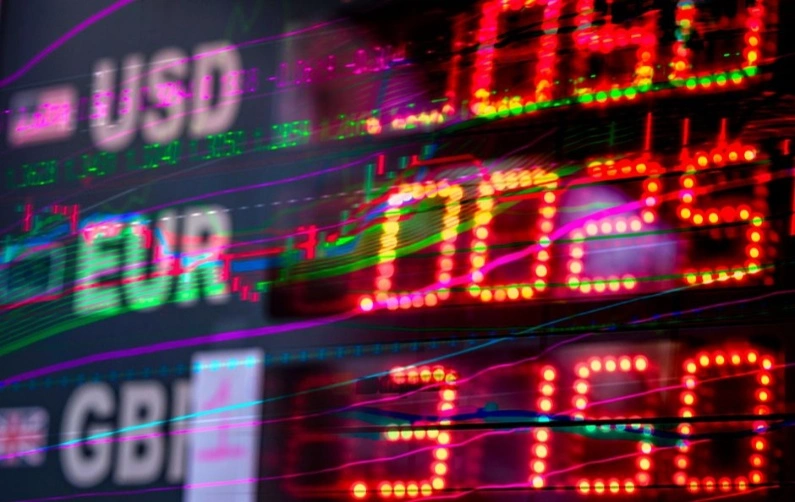
Fears over AI market slow impact global tech stocks
Section: Business
Germany has shifted its energy dependencies, now importing a significant quantity of liquefied natural gas (LNG) from the United States, raising concerns about price stability and security of supply. The strategic shift follows efforts to reduce reliance on Russian gas, but critics warn of new vulnerabilities linked to the unpredictability of U.S. energy policies potentially influencing European gas prices.
As winter approaches, Germany's gas storage facilities are at historically low levels for this time of year. However, the country benefits from a robust LNG infrastructure that allows for quick procurement of supplies if needed, contrasting with past conditions when reliance on Russian pipelines was more pronounced. Currently, Germany sources about twelve percent of its gas imports as LNG via domestic terminals, according to Sebastian Gulbis from the consultancy Enervis. More than ninety percent of this LNG originates from the United States, effectively accounting for ten percent of Germany’s total gas consumption.
The geopolitical dynamics have placed American LNG exports at the center of European energy discussions. Politicians and energy sector experts have expressed concerns over the potential for U.S. President Donald Trump to leverage LNG exports as a means of exerting political pressure. Andreas Goldthau of the Willy Brandt School of Public Policy stated that even an announcement from the U.S. about possibly revoking export permits could lead to a sharp increase in European gas prices. Loyle Campbell of the Deutsche Gesellschaft für Auswärtige Politik suggested there is certainty that the U.S. may use energy exports to achieve political objectives.
Germany's energy strategy has diversified its risk portfolio but introduced new dependencies. While import reliance on Norway stands at a more substantial 42 percent, described by Gulbis as more reliable compared to U.S. sources under Trump, the strategic importance of U.S. LNG has grown due to its global market share as the largest LNG exporter.
The recent conflict in Iran has exacerbated existing tensions, as damage to Qatar's LNG export infrastructure has limited global supply to some extent. This situation has further underscored the significance of U.S. LNG supplies to Europe. Currently, approximately twenty percent of Germany's gas imports, and roughly the same proportion for the broader EU market, are derived from U.S. sources.
The implications of this shift are broad, touching on trade relations, energy security, and regional geopolitics. The situation illustrates a complex trade-off between gaining independence from Russian energy supplies and the inherent risk of depending on a volatile and politically charged U.S. market. While Germany continues to develop alternative energy strategies, its interim reliance on American LNG remains a critical component of its energy mix.
Section: Business
Section: Politics

Section: Travel
Section: News

Section: Science

Section: Health
Section: Business

Section: Fashion

Section: Science

Section: Business
Both private Health Insurance in Germany and public insurance, is often complicated to navigate, not to mention expensive. As an expat, you are required to navigate this landscape within weeks of arriving, so check our FAQ on PKV. For our guide on resources and access to agents who can give you a competitive quote, try our PKV Calculator.
Germany is famous for its medical expertise and extensive number of hospitals and clinics. See this comprehensive directory of hospitals and clinics across the country, complete with links to their websites, addresses, contact info, and specializations/services.
Didn't manage to get a ticket for Linkin Park? Or still not enough after the concert? Join us at CRASH on June 12th for our "IN THE END" Linkin Park Special + CORE NIGHT.All night long, we'll be playing Linkin Park's music, along with Nu Metal, Metalcore, and Alternative Rock from bands such as Limp...



No comments yet. Be the first to comment!