
Fears over AI market slow impact global tech stocks
Section: Business
A recent Russian airstrike in the Sumy region of northeastern Ukraine resulted in the deaths of at least five civilians and left more than thirty injured, according to local authorities. The strike, which targeted a civilian area, involved the use of three precision-guided glide bombs that severely damaged infrastructure, including a minibus carrying local residents.
Among those present during the attack was a German humanitarian team from the organization Bravery e.V., which had been delivering aid and evacuating people from high-risk zones near the frontline. The team reported that the explosion occurred only a short distance from their vehicle. The force was sufficient to shatter the armored glass of their transport van, though the occupants were unharmed. The group had recently transported a newly armored vehicle into the region to enhance their operational safety while assisting civilians in conflict zones.
Following the strike, the humanitarian workers observed extensive destruction. The area was engulfed in smoke and flames, with emergency services working to control the fires and assist the injured. The local military administration stated that among the fatalities was a young girl, further highlighting the impact of the ongoing conflict on non-combatants.
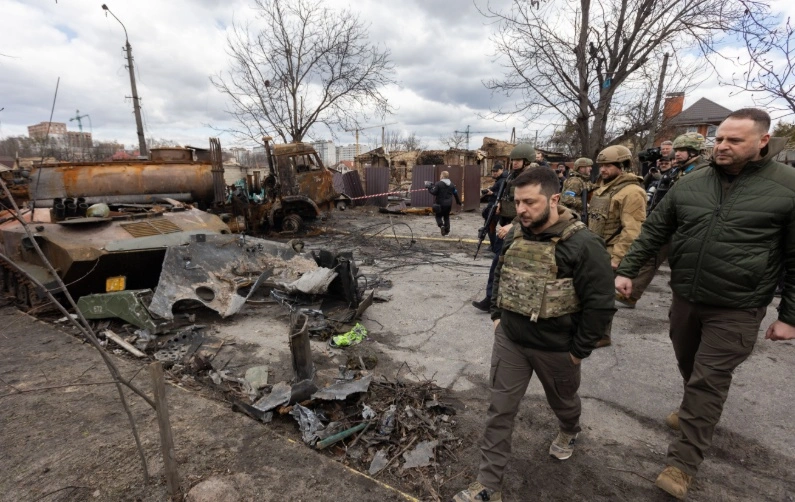
This incident in Sumy is part of a broader pattern of attacks that have affected civilian populations across Ukraine. Reports from other regions, including Druschkiwka in the Donbas and Kramatorsk, have also indicated civilian casualties resulting from Russian airstrikes. In Druschkiwka, an evacuation worker described the aftermath of an attack that left three people dead amid burned residences and rubble. Kramatorsk experienced two separate airstrikes on residential areas, leading to six additional civilian deaths, including two teenagers.
Ukrainian officials continue to document and report these incidents, emphasizing the continued risk to civilians as hostilities persist. Humanitarian organizations operating in affected regions face considerable dangers as they attempt to provide aid, evacuate residents, and document the consequences of military actions on the local population.
The escalation of airstrikes in civilian areas has raised concerns among international observers and humanitarian agencies. The use of guided munitions in densely populated regions increases the risk of mass casualties and complicates evacuation and relief efforts. Aid groups such as Bravery e.V. have responded by enhancing their protective measures, including the deployment of armored vehicles and revised protocols for staff safety.
Local and international efforts are ongoing to deliver medical assistance, food supplies, and psychological support to those directly affected by the conflict. Many of the injured have been transported to regional hospitals, where medical teams are working to treat trauma injuries resulting from the blasts. Authorities in Sumy and other regions continue to investigate the attacks and coordinate emergency response operations with the support of volunteer and professional rescue teams.
The repeated targeting of civilian infrastructure and transport has underscored the risks faced by non-combatants in the ongoing conflict. Humanitarian organizations and local officials have reiterated calls for the protection of civilians and adherence to international humanitarian law. Despite these appeals, the situation in frontline regions like Sumy remains volatile, with aid workers often finding themselves in proximity to active combat zones.
As the conflict continues, the experiences of humanitarian teams and the communities they support highlight both the challenges of delivering assistance and the enduring impact of military operations on civilian lives.
Section: Business
Section: Politics

Section: Travel

Section: News

Section: Science

Section: Health

Section: Business

Section: Fashion

Section: Science

Section: Business
Both private Health Insurance in Germany and public insurance, is often complicated to navigate, not to mention expensive. As an expat, you are required to navigate this landscape within weeks of arriving, so check our FAQ on PKV. For our guide on resources and access to agents who can give you a competitive quote, try our PKV Calculator.
Germany is famous for its medical expertise and extensive number of hospitals and clinics. See this comprehensive directory of hospitals and clinics across the country, complete with links to their websites, addresses, contact info, and specializations/services.
Didn't manage to get a ticket for Linkin Park? Or still not enough after the concert? Join us at CRASH on June 12th for our "IN THE END" Linkin Park Special + CORE NIGHT.All night long, we'll be playing Linkin Park's music, along with Nu Metal, Metalcore, and Alternative Rock from bands such as Limp...



No comments yet. Be the first to comment!