
Fears over AI market slow impact global tech stocks
Section: Business
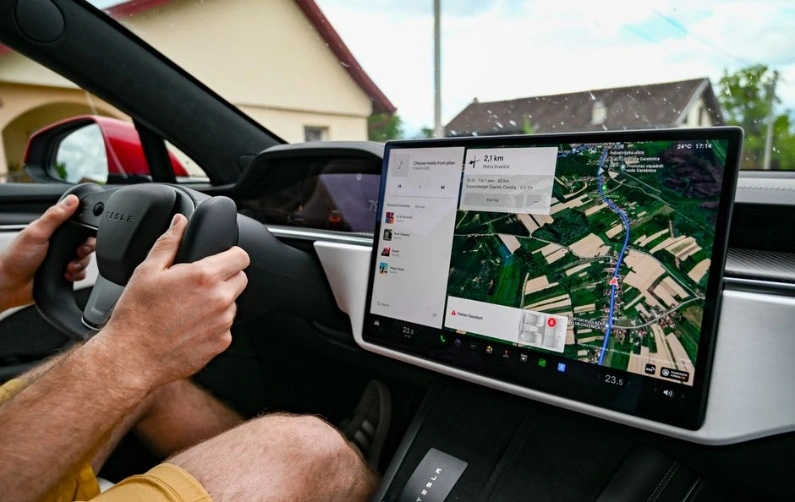
Researchers from the Acoustical Society of Japan have made advancements in creating more effective warning sounds for electric vehicles (EVs), aiming to improve road safety for vulnerable road users such as pedestrians and cyclists. These new sounds are designed to be more easily detected by individuals in various traffic environments, addressing the challenge posed by the quiet operation of electric vehicles at low speeds.
To address the risk posed by the near-silent movement of EVs, many countries, including Germany, have mandated the use of artificial warning systems known as Acoustic Vehicle Alerting Systems (AVAS) for vehicles traveling under 20 km/h. While manufacturers are allowed to design their own warning sounds, not all are consistently effective in alerting nearby pedestrians and cyclists, especially in noisy urban environments.
The Japanese research team focused on developing a sound that would be difficult to overlook in diverse conditions. Their approach involved the use of onomatopoeic elements--sounds that mimic real-life noises--and 'pink noise' (also known as 1/f noise), which features a frequency spectrum that is perceived as balanced across both low and high frequencies by the human ear. Pink noise is characterized by its dominance of lower frequencies, which tend to be less masked by ambient urban sounds, making it an optimal choice for alert signals.
To develop and test their solution, the researchers constructed a library of different warning sounds combining onomatopoeic cues with varying levels of pink noise. These sounds were evaluated by test participants in both controlled laboratory settings and under real-world street conditions. Participants were asked to assess the urgency and audibility of each sound, allowing the researchers to rank the effectiveness of the various options.
Findings from these tests indicated that warning sounds with a higher proportion of pink noise were most successful in ensuring the presence of an approaching electric vehicle was noticed. This effectiveness is largely attributed to the strong low-frequency components within pink noise, which are less likely to be drowned out by surrounding environmental noise, closely resembling the familiar auditory cues associated with traditional combustion engine vehicles.
As a result, the new warning sound design stands out as a promising candidate for widespread adoption, offering enhanced audibility under a broad range of conditions. The project not only focuses on passenger electric vehicles but has also expanded to study the application of similar alert sounds for smaller electric modes of transport, such as e-bikes and e-scooters. The overall objective is to bolster road safety and reduce the likelihood of accidents involving vulnerable road users who may not easily perceive the approach of these quiet vehicles.
This initiative underscores the importance of continuous research and development in the field of traffic safety as the automotive industry transitions to electric mobility. The adoption of scientifically optimized warning sounds could play a crucial role in preventing collisions and supporting safer urban environments as electric vehicles become increasingly prevalent on public roads.
Section: Business

Section: Politics

Section: Travel

Section: News
Section: Science

Section: Health
Section: Business

Section: Fashion

Section: Science

Section: Business
Both private Health Insurance in Germany and public insurance, is often complicated to navigate, not to mention expensive. As an expat, you are required to navigate this landscape within weeks of arriving, so check our FAQ on PKV. For our guide on resources and access to agents who can give you a competitive quote, try our PKV Calculator.
Germany is famous for its medical expertise and extensive number of hospitals and clinics. See this comprehensive directory of hospitals and clinics across the country, complete with links to their websites, addresses, contact info, and specializations/services.
Didn't manage to get a ticket for Linkin Park? Or still not enough after the concert? Join us at CRASH on June 12th for our "IN THE END" Linkin Park Special + CORE NIGHT.All night long, we'll be playing Linkin Park's music, along with Nu Metal, Metalcore, and Alternative Rock from bands such as Limp...


No comments yet. Be the first to comment!