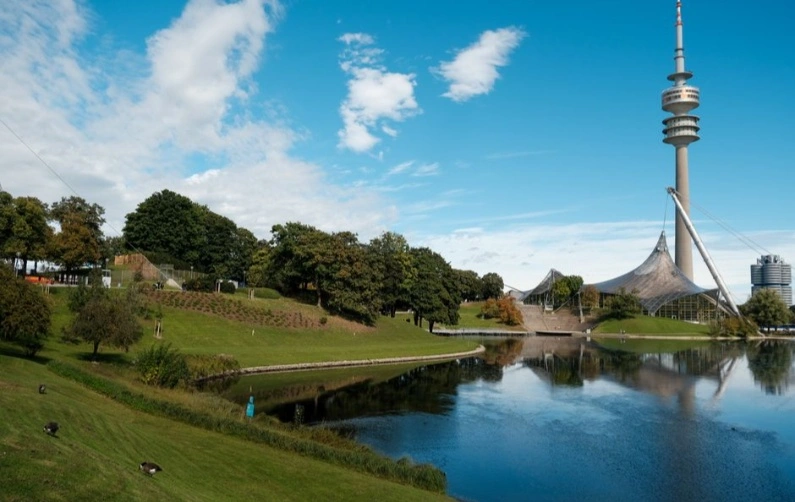
Munich enters race for hosting future Olympic Games
Section: Arts
The landscape of energy supply in Germany is undergoing significant changes as the reliance on traditional pipelines, particularly the Nord Stream system, faces challenges. With Russia halting gas deliveries through the Baltic Sea, questions arise about the future of energy sourcing in the region. Despite the physical infrastructure of Nord Stream remaining partially operational, the dynamics of gas supply are shifting towards Liquefied Natural Gas (LNG) alternatives.
Recently, Gascade, the gas network operator, has made headlines by acquiring unused sections of Nord Stream 2. These segments, which were previously rendered inactive due to geopolitical tensions, are being repurposed to connect the Sassnitz-Mukran port on Rügen Island with Lubmin, a location in Mecklenburg-Vorpommern. This new 50-kilometer pipeline route traverses the Baltic Sea, raising questions about the strategic implications of utilizing existing infrastructure in a time of energy transition.
As Germany seeks to diversify its energy sources, LNG has emerged as a pivotal player in the energy market. Companies like ReGas, based in eastern Germany, have reported a strong start in the LNG sector, positioning themselves as competitive alternatives to traditional suppliers. The pricing strategies of these new entrants, however, are under scrutiny, especially in light of alleged aggressive pricing tactics from state-backed competitors in the west.
The interplay between traditional gas supplies and new LNG terminals reflects a broader trend in Europe's energy landscape, where energy independence and sustainability are becoming paramount. As the EU works to reduce its reliance on Russian energy, the infrastructure investment in LNG terminals signifies a shift towards a more resilient energy supply chain.
However, the question remains whether the current LNG terminals can meet the anticipated demand without facing overcapacity issues. Analysts are monitoring the situation closely, with some warning that the rapid expansion of LNG infrastructure may lead to an oversupply, affecting market stability. This situation necessitates careful planning and coordination among stakeholders to ensure that the energy transition is both efficient and sustainable.
In conclusion, the transformation of Germany's energy landscape is evident as LNG emerges as a critical alternative to traditional gas supplies. The strategic repurposing of existing infrastructure alongside the development of new LNG terminals marks a significant step towards energy diversification. As the market evolves, the balance between supply and demand will be crucial in shaping a sustainable energy future for Germany and the broader European region.
Section: Arts
Section: Business
Section: Business

Section: News
Section: Arts
Section: Science

Section: Business
Section: Arts
Section: Arts

Section: Health
Both private Health Insurance in Germany and public insurance, is often complicated to navigate, not to mention expensive. As an expat, you are required to navigate this landscape within weeks of arriving, so check our FAQ on PKV. For our guide on resources and access to agents who can give you a competitive quote, try our PKV Calculator.
Germany is famous for its medical expertise and extensive number of hospitals and clinics. See this comprehensive directory of hospitals and clinics across the country, complete with links to their websites, addresses, contact info, and specializations/services.
Didn't manage to get a ticket for Linkin Park? Or still not enough after the concert? Join us at CRASH on June 12th for our "IN THE END" Linkin Park Special + CORE NIGHT.All night long, we'll be playing Linkin Park's music, along with Nu Metal, Metalcore, and Alternative Rock from bands such as Limp...



No comments yet. Be the first to comment!