
Fears over AI market slow impact global tech stocks
Section: Business
A leading company based in Bavaria is progressing towards the implementation of a three-day workweek for employees at its headquarters, reflecting a growing shift in workplace organization and employee well-being. The initiative, spearheaded by the system catering firm Yorma's with headquarters in Plattling, Lower Bavaria, aims to enable staff to concentrate their weekly working hours into just three days while maintaining full pay.
The company, which operates 59 branches primarily at railway stations across Germany, has been exploring flexible work models since early 2024. While Yorma's retail operations--focused on sales of baked goods, salads, fruit cups, snacks, and hot beverages--are not currently suitable for reduced workweek models due to operational demands, the central office has proven to be a more adaptable environment for such changes. Here, employees are engaged in administrative, payroll, human resources, technical, accounting, and press-related tasks.
Currently, staff at Yorma's headquarters are working 32-hour weeks spread over four days, with plans in place to further reduce this to 26-28 hours over three days. The organization has been leveraging digital tools and artificial intelligence to streamline workflows and enable further efficiency gains. Digitalization of operations has been a hallmark of the Plattling headquarters for more than two decades, and ongoing automation projects are facilitating the shift towards fewer working hours without compromising productivity.
The transition towards a three-day workweek is being approached gradually and in close consultation with employees. Each department is evaluating its processes to identify further opportunities for time savings and efficiency improvements. Management has emphasized that the change will only be implemented when it can be done sustainably and without negative impact on operations, reflecting a commitment to both innovation and responsibility.
The introduction of the four-day workweek at the headquarters has already led to positive feedback from employees, who report improved work-life balance and increased satisfaction. The next step to a three-day schedule is seen as a continuation of these benefits, potentially positioning the company as an innovator in progressive employment practices within the region and the broader industry.
While the retail side of the business is not expected to transition to reduced working weeks due to the necessity of continuous customer service, the company continues to monitor developments and remains open to further changes where feasible. The move underscores a broader trend in the German business landscape, with more organizations reevaluating traditional work structures in response to evolving employee expectations and technological advancements.
Section: Business

Section: Politics

Section: Travel

Section: News

Section: Science

Section: Health

Section: Business
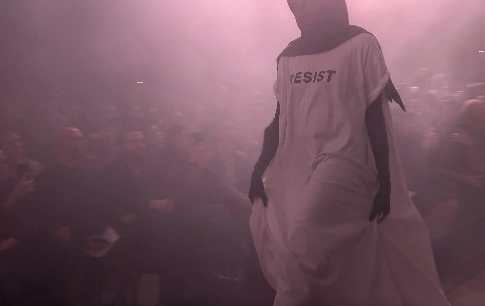
Section: Fashion

Section: Science

Section: Business
Both private Health Insurance in Germany and public insurance, is often complicated to navigate, not to mention expensive. As an expat, you are required to navigate this landscape within weeks of arriving, so check our FAQ on PKV. For our guide on resources and access to agents who can give you a competitive quote, try our PKV Calculator.
Germany is famous for its medical expertise and extensive number of hospitals and clinics. See this comprehensive directory of hospitals and clinics across the country, complete with links to their websites, addresses, contact info, and specializations/services.
Didn't manage to get a ticket for Linkin Park? Or still not enough after the concert? Join us at CRASH on June 12th for our "IN THE END" Linkin Park Special + CORE NIGHT.All night long, we'll be playing Linkin Park's music, along with Nu Metal, Metalcore, and Alternative Rock from bands such as Limp...



No comments yet. Be the first to comment!