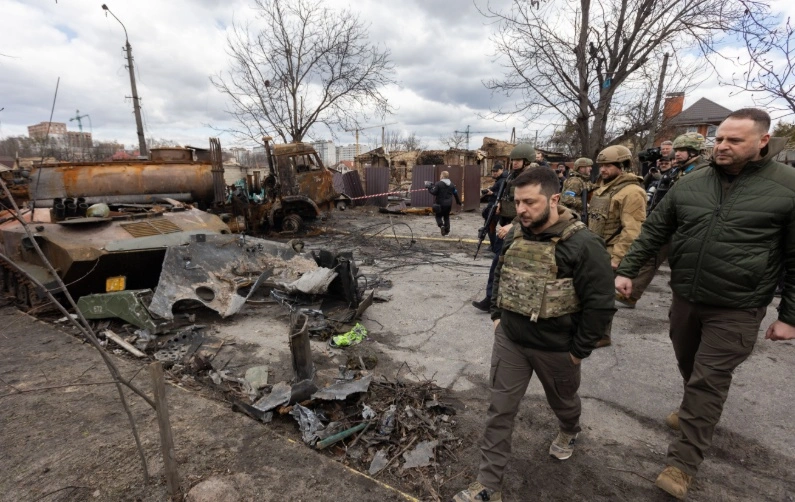
Zelensky urges US to enforce limited ceasefire
Section: Politics
Researchers have introduced a concept aimed at strengthening Earth's defenses against intense solar storms, proposing the deployment of a series of satellites to temporarily reinforce the planet's magnetic shield. The initiative, developed by a team in the United States, addresses the growing concerns about the vulnerability of critical infrastructure to severe space weather events.
The Threat Posed by Solar StormsSolar storms, also referred to as geomagnetic storms, are disturbances in Earth's magnetosphere caused by solar wind shockwaves, often triggered by solar flares or coronal mass ejections. When charged particles from the sun interact with Earth's magnetic field, they can weaken the field and expose the planet to increased radiation. The consequences of such events range from disruptions to satellite operations and communication networks to widespread power outages. In recent years, experts have highlighted the risks of an 'internet apocalypse,' where a major solar event could severely impact global internet infrastructure and other technological systems.
A New Approach: The 'StormWall' Satellite SystemThe research group proposes launching approximately six satellites equipped with reserves of alkaline chemicals. In the event of a solar storm approaching Earth, these satellites would release chemicals into space, which would then ionize and form plasma. The newly generated plasma would be pushed to the edge of Earth's magnetosphere, where it could absorb and dissipate some of the incoming solar energy. By doing so, the system is expected to reduce the intensity of the storm by up to fifty percent. The plasma would remain in place for only a few hours before being expelled by the natural processes of the magnetosphere, necessitating the deployment of new satellites for future events.
Existing Technology and FeasibilityThe researchers emphasize that the technology required for this initiative already exists. The satellites would utilize established propulsion and chemical storage methods, making the solution practical and potentially cost-effective when compared to the potential economic damage of a major solar storm. The total amount of chemical material needed would be comparable to the load of approximately twelve fuel tankers. Although the main obstacle is the initial expense, the team is actively exploring ways to minimize costs further and increase the viability of the concept.
Potential Impact on InfrastructureGeomagnetic storms can cause significant disruptions to both space-based and terrestrial infrastructure. Power grids, navigation systems, and communication networks are particularly susceptible to interference from heightened solar activity. The possibility of proactively mitigating these risks through a satellite-based intervention represents a notable step forward in space weather resilience. According to the team, the system could offer a scalable and repeatable method to shield critical assets during periods of heightened solar activity.
Publication and Next StepsThe study, detailing the theoretical framework and potential applications of the satellite system, has been published in the scientific journal Space Weather. The research group intends to refine the concept further, focusing on cost reduction and logistical planning for implementation. The solution, named 'StormWall,' aims to provide an additional layer of defense for Earth's technological infrastructure in the face of increasingly frequent and intense solar events.
Section: Politics

Section: News

Section: Science

Section: Health
Section: Business

Section: Fashion

Section: Science

Section: Business

Section: Health
Section: Business
Both private Health Insurance in Germany and public insurance, is often complicated to navigate, not to mention expensive. As an expat, you are required to navigate this landscape within weeks of arriving, so check our FAQ on PKV. For our guide on resources and access to agents who can give you a competitive quote, try our PKV Calculator.
Germany is famous for its medical expertise and extensive number of hospitals and clinics. See this comprehensive directory of hospitals and clinics across the country, complete with links to their websites, addresses, contact info, and specializations/services.
Didn't manage to get a ticket for Linkin Park? Or still not enough after the concert? Join us at CRASH on June 12th for our "IN THE END" Linkin Park Special + CORE NIGHT.All night long, we'll be playing Linkin Park's music, along with Nu Metal, Metalcore, and Alternative Rock from bands such as Limp...



No comments yet. Be the first to comment!