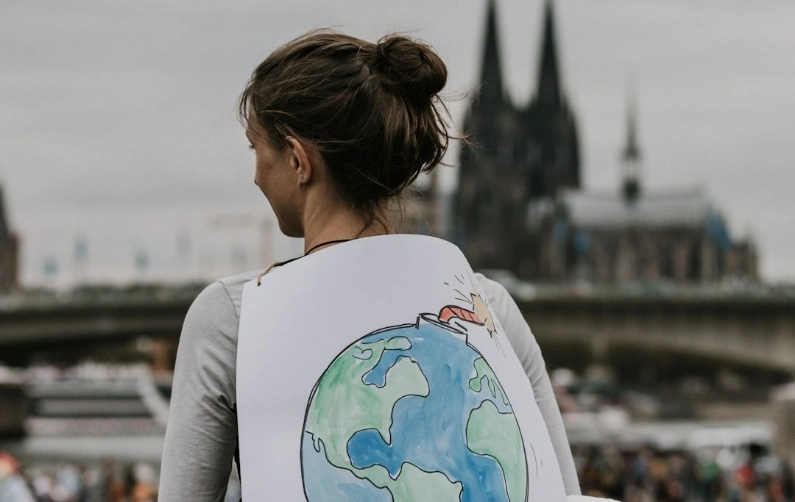
Research indicates climate change must be declared a global health emergency
Section: News
Germany's search for a permanent storage solution for its high-level nuclear waste continues, as the country intensifies efforts to identify a suitable site. The undertaking, which began several years ago, aims to address the challenges posed by nuclear waste management amid Germany's transition away from nuclear energy.
The project received renewed attention following a report broadcast on October 27, 2026, highlighting the current status of the search. German authorities remain committed to finding a secure location that can adequately contain radioactive materials for thousands of years, ensuring public safety and environmental protection.
Officials have been meticulously evaluating various potential sites across the country. The evaluation process involves geological, environmental, and social factors to determine the most suitable location for an underground repository. One significant criterion is the geological stability of a site, which is crucial for ensuring long-term containment and preventing any leakage of radioactive materials.
As of now, no definitive site has been selected, and the process is expected to take several more years. The Federal Company for Radioactive Waste Disposal (BGE) is responsible for overseeing this search, working in collaboration with experts and scientists to ensure all potential risks are thoroughly assessed.
Germany's shift away from nuclear energy is part of its broader energy transition plan, known as the 'Energiewende.' The goal is to move towards more sustainable and renewable energy sources, in light of global efforts to combat climate change and reduce dependence on fossil fuels. As part of this transition, Germany has shut down several of its nuclear power plants in recent years, further highlighting the need for a long-term solution to the waste produced.
The complexity of finding a suitable storage site is further compounded by the concerns of local communities near potential locations. Public opposition and the need for consent from local authorities and the public are significant factors in the decision-making process. Ensuring transparency and public participation has been identified as essential for the success of the project.
In addition, Germany is looking at international collaborations to learn from other countries that have more advanced nuclear waste disposal systems in place. For example, Finland's Onkalo facility, the first deep geological repository for spent nuclear fuel, has been cited as a successful model of long-term nuclear waste management.
The German government continues to emphasize its commitment to a transparent and scientifically rigorous selection process. The next steps involve narrowing down potential sites, followed by detailed investigations and discussions with all stakeholders, including the public, scientists, and local governments.
The country remains focused on meeting its zero nuclear power target by the end of 2022, while simultaneously managing the challenge of nuclear waste. This ongoing project not only marks a critical component of Germany’s energy transition but also represents a significant responsibility in safeguarding future generations against the dangers posed by nuclear waste.
Source: tagesschau.de
Section: News
Section: News

Section: Travel
Section: Business

Section: Science
Section: News
Section: News
Section: News

Section: Business
Section: Politics
Both private Health Insurance in Germany and public insurance, is often complicated to navigate, not to mention expensive. As an expat, you are required to navigate this landscape within weeks of arriving, so check our FAQ on PKV. For our guide on resources and access to agents who can give you a competitive quote, try our PKV Calculator.
Germany is famous for its medical expertise and extensive number of hospitals and clinics. See this comprehensive directory of hospitals and clinics across the country, complete with links to their websites, addresses, contact info, and specializations/services.
Didn't manage to get a ticket for Linkin Park? Or still not enough after the concert? Join us at CRASH on June 12th for our "IN THE END" Linkin Park Special + CORE NIGHT.All night long, we'll be playing Linkin Park's music, along with Nu Metal, Metalcore, and Alternative Rock from bands such as Limp...

No comments yet. Be the first to comment!