
Fears over AI market slow impact global tech stocks
Section: Business
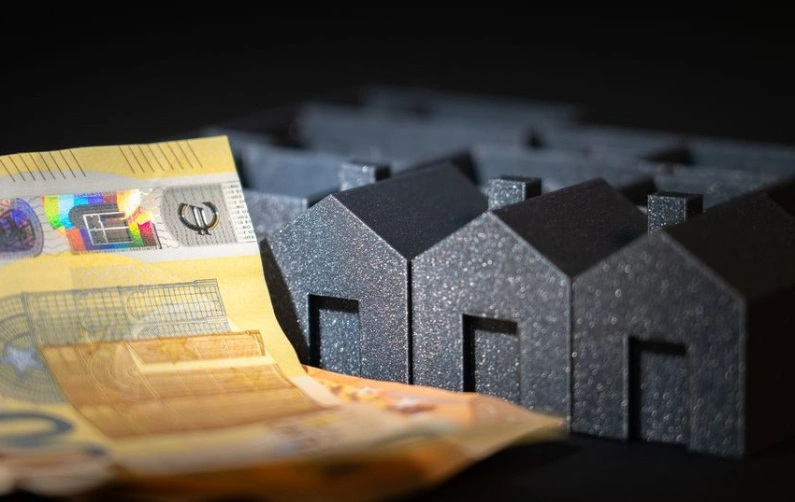
The recent overhaul of property tax regulations across Germany, prompted by a Federal Constitutional Court decision, aimed to introduce a fairer, legally compliant calculation method. Policymakers had pledged that the new property tax model would remain revenue-neutral for local governments as a whole, meaning overall tax income would not increase as a result of the reform. However, fresh data reveals that in several federal states, municipal authorities have collected significantly higher property tax revenues since implementing the changes.
In Bavaria, the impact of the reform has been particularly pronounced. According to figures from the Federal Statistical Office, municipalities in the state recorded an average 10.4 percent rise in property tax revenues in 2025, representing the highest increase among all German states with large geographical coverage. This upward trend suggests that local governments have used the recalibration of rates to boost their budgets, despite assurances to the contrary.
Authorities in Bavaria state that, according to the official political intent, property tax revenues at the municipal level were not supposed to exceed pre-reform levels. Nevertheless, the setting of specific tax rates was left to the discretion of individual municipalities, leading to varied outcomes.
Other states also experienced increases, albeit to a lesser extent. In Hesse, average municipal property tax revenues grew by 3.7 percent, while Lower Saxony and Saxony saw respective increases of 1.7 percent and 1.1 percent. In Baden-Württemberg, the rise was more modest, amounting to only 0.3 percent.
Conversely, several regions reported declines in property tax income. The most significant reduction occurred in Thuringia, where local governments experienced a 6 percent drop. Other notable decreases included Saxony-Anhalt (down 5.3 percent), North Rhine-Westphalia (down 4 percent), Saarland (down 2.3 percent), Brandenburg (down 1.7 percent), Mecklenburg-Western Pomerania (down 1.4 percent), Rhineland-Palatinate (down 0.4 percent), and Schleswig-Holstein (down 0.2 percent). Data for the city-states of Hamburg, Bremen, and Berlin was not available at the time of reporting.
Despite some regional disparities, the nationwide average for property tax revenue--combining both agricultural (A) and standard (B) property taxes--remained steady at 14.5 billion euros over the past year. This demonstrates that while some municipalities have leveraged the reform to increase their tax intake, others have managed to reduce or maintain stable revenue streams.
Experts note that the variation in revenue changes is largely attributable to the autonomy granted to local councils in setting property tax rates. This flexibility has led to differing fiscal strategies and, in some cases, outcomes that diverge from the original objective of revenue neutrality. The property tax reform and its implementation will likely remain a subject of debate among policymakers, property owners, and municipal officials as further data emerges and the effects become clearer in the coming years.
Section: Business
Section: Politics

Section: Travel
Section: News
Section: Science

Section: Health
Section: Business
Section: Fashion

Section: Science

Section: Business
Both private Health Insurance in Germany and public insurance, is often complicated to navigate, not to mention expensive. As an expat, you are required to navigate this landscape within weeks of arriving, so check our FAQ on PKV. For our guide on resources and access to agents who can give you a competitive quote, try our PKV Calculator.
Germany is famous for its medical expertise and extensive number of hospitals and clinics. See this comprehensive directory of hospitals and clinics across the country, complete with links to their websites, addresses, contact info, and specializations/services.
Didn't manage to get a ticket for Linkin Park? Or still not enough after the concert? Join us at CRASH on June 12th for our "IN THE END" Linkin Park Special + CORE NIGHT.All night long, we'll be playing Linkin Park's music, along with Nu Metal, Metalcore, and Alternative Rock from bands such as Limp...

No comments yet. Be the first to comment!